|
Just sit with that for a moment.
Notice what the psalm does not say. It does not say the mountains will stop trembling. It does not say the waters will grow quiet. The earth is still giving way. The seas are still roaring. And right in the middle of all of that — God is our refuge. A very present help. Not a distant comfort, not a future promise only — a present one. Right here. Right now.
That word refuge in the Hebrew carries the sense of a place you run to. It's not a place that removes the danger, but a place that holds you while the danger is real. That is who God is for you today.
A God Who Speaks Into Real Suffering — Isaiah 41:10 in Context
This language of refuge is not just poetry. God has always spoken these words into real, aching human situations — and it is worth pausing to remember that.
Isaiah 41 was written to the people of Israel during one of the hardest seasons in their entire history. They were in exile in Babylon — carried far from home, far from the temple, far from everything familiar. Their world had not merely trembled. It had collapsed. The nation was broken. And into that collapse — into that real, concrete suffering — God speaks. Here is what He says in verse 10:
"Fear not, for I am with you; be not dismayed, for I am your God; I will strengthen you, I will help you, I will uphold you with my righteous right hand." — Isaiah 41:10
God did not say, "I have ended the exile." He said, "I am with you in it." He did not promise to make the pain disappear. He promised His presence, His strength, and His upholding hand. He took their suffering seriously enough to enter into it with them.
And notice to whom He is speaking. Not to the confident. Not to the composed. He is speaking to people who were afraid and dismayed and far from home. If that is where you find yourself today — if it feels as though the waves are crashing and the ground is giving way beneath you — this word can belong to you too.
Running to the Harbor — Acts 27–28
I want you to picture something for a moment.
In Acts 27, the Apostle Paul is on a ship bound for Rome. He is a prisoner — which means he has no say over where the ship goes or how fast it travels. And then a violent northeastern storm, a wind the sailors call the Euroclydon, sweeps down and seizes the ship whole. For fourteen days, Paul and everyone aboard are battered by wind and wave with no sun and no stars to navigate by. The crew throws the cargo overboard. They throw the ship's "tackle" overboard with their own hands. (Acts 27:19) That word means they personally loosed everything onboard that was not indispensable — the anchor, sails, cables, etc. Luke writes plainly that "all hope of our being saved was at last abandoned." (Acts 27:20) That paints us a grim picture.
And then they run aground on the island of Malta.
Malta was not their destination, but it became their harbor — the place of rescue. And what is remarkable is that God had already spoken into the storm before it was over. An angel had told Paul: "Do not be afraid, Paul... God has granted you all those who sail with you." (Acts 27:24) The harbor was coming. The rescue was already decided. Paul just couldn't yet see it yet from the middle of the storm.
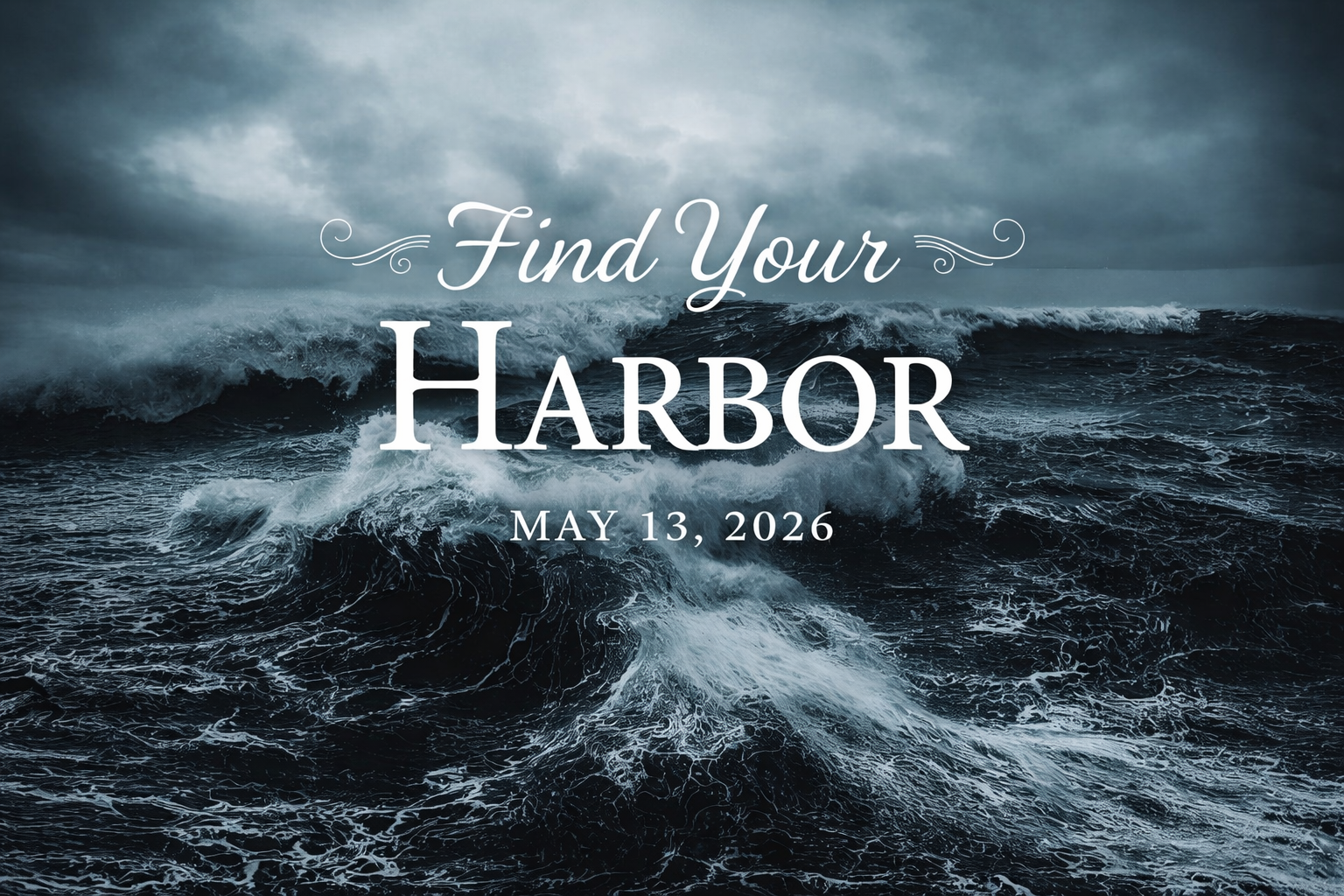
That is the picture Psalm 46 is painting. God is not offering you a storm-free life. He is offering you Himself — a harbor you can run to, not to escape the storm, but to find that He is already there, that the rescue is already decided, that His presence surrounds you even when the water is still roaring. The harbor is not the absence of the storm. The harbor is the presence of God within it.
Open Hands, Not Clenched Fists — A Posture of Surrender
So, how do we actually live this? How do we move from hearing these words to inhabiting them?
Come back to verse 10 one more time. "Be still, and know that I am God."
That phrase — be still — is worth sitting with in the Hebrew. The word "רָפָה" (raphah) means to let go, to release, to relax the grip. It is not passive resignation. It is the active, trusting act of opening your hands. It is the posture of surrendering your angst to Him. It is casting overboard every rival confidence—anything you’re tempted to trust in place of God Himself.
Think about what it looks like when we fail to do this. We grip our circumstances tighter and tighter. We rehearse our worries. We lie awake running through every possible outcome. We clench our fists around things never meant to bear the weight of our confidence. And all that gripping doesn’t steady us — it only drains us.
Surrender is not giving up. Surrender is not weakness. Surrender is the honest, courageous act of saying out loud: "Lord, You are sovereign over all things. I entrust to You what lies beyond my power, resting in Your wise and perfect will."
Paul could neither steer that ship nor calm the sea. But he could receive the word God gave him. And he could stand up — right there in the chaos — and confidently say to everyone around him: "Take heart, for I believe God that it will be exactly as I have been told." (Acts 27:25) That is what open hands look like in the middle of a storm. Not certainty about the outcome but trust in the One who holds it.
What are the things — the relationships, the fears, the uncertain futures, the health worries, the hard conversations that haven't happened yet — that make up your storm? But more importantly, what are you gripping right now that was never meant to bear the weight of your confidence amidst that storm? Be still. Open your hands. Know that He is God, and that He is very present, right here, in this trouble with you.
Trust the Sovereign — Closing Reflection
Before we close, there is one truth that must be said plainly: this refuge belongs to those who are in Christ. Apart from Him, the storm remains our own to bear. But Christ receives all who come to Him. Trust in Him today—trust His finished work, His righteousness, His saving mercy—and you will find your harbor.
So if you are in Christ, carry this one question with you into the rest of your day: What is one burden you will consciously place in God’s hands before this day is over?
Not tomorrow. Today. One thing. Give it a name. Be specific with God — He can handle the details. Open your hands around it, say it to Him out loud if you need to, write it down if that helps. And then — as an act of faith, not as a feeling — release it to the God who calls Himself your refuge, your strength, and your very present help.
|