Inheriting Grace
Ephesians 6:1-4 ESV
"Children, obey your parents in the Lord, for this is right. 'Honor your father and mother' (this is the first commandment with a promise), 'that it may go well with you and that you may live long in the land.' Fathers, do not provoke your children to anger, but bring them up in the discipline and instruction of the Lord."
In this passage, Paul gives us just four verses on parenting. And yet within these four verses lies a compact theology of the family — small in size, but rich in substance. We should notice the phrase that anchors the whole household code that began back in chapter 5: “in the Lord”. Throughout this code, Paul roots every relationship in the household — husbands, wives, masters, servants — in submission to Christ, so that each duty is carried out not merely as social custom but as an act of devotion to Christ. That same anchoring carries into this passage, shaping how children are to obey and how parents are to rear them.
Paul is not merely giving generic household advice that any moralist in Ephesus could have offered. He is describing a household reordered by the gospel — where every relation, every duty, every act of obedience or instruction, finds its shape and its power in union with Christ. Apart from the Lord, the family devolves into either tyranny or chaos. In the Lord, the family becomes a small theater of grace, where children learn what it means to submit to authority, and where parents learn what it means to exercise authority as those who will themselves give an account to God.
I want us to look briefly at both halves of this household — first, at the calling given to children, and second, at the calling given to fathers — and then close with a word for those of you whose children have long since left the home.
Children, Obey Your Parents in the Lord (vv. 1-3)
Paul's command is direct: "Children, obey your parents in the Lord, for this is right." But then he does something remarkable — he reaches back nearly fifteen centuries into Israel's history and quotes directly from the Commandments: "Honor your father and mother... that it may go well with you and that you may live long in the land." This is as close to word-for-word that you can get while quoting a Hebrew text in Greek.
Why does this matter? Because Paul is showing us that the command to honor parents is not a novel Christian innovation, nor merely a cultural convention of the first-century Mediterranean household. Paul is anchoring the authority of his exhortation in God's own law, given at Sinai, for the ordering of human family life.
Some people may assume that Paul’s application of the Law means Christians are still bound to the Mosaic Law. However, reformed theology makes a helpful distinction: the ceremonial law—sacrifices, priesthood, dietary rules—were shadows of which Christ is the true substance; the civil law governed Israel as a nation; but the moral law, reflecting God’s unchanging character, remains as a moral standard for all people in all ages. The fifth commandment belongs to this moral category. It is rooted in creation itself (Gen 2:24). —parents under God, children under parents—and Paul simply reaffirms it for the church under the new covenant, still “in the Lord.”
So, when a child obeys a parent, or when a grown son honors his mother's counsel, he is not merely following a nice suggestion. He is walking in step with the moral order God etched into the world at creation and confirmed at Sinai. This is right, Paul says — not merely helpful, not merely wise, but right, because it echoes God's own design.
But Paul also echoes the promise attached to the Commandment: “that it may go well with you and that you may live long in the land” (v. 4). Under the Mosaic covenant, Israel’s life in the promised land carried a clear condition. God declared in second Kings, “I will not cause the feet of Israel to wander anymore out of the land that I gave to their fathers, if only they are careful to do all that I have commanded them, and according to all the Law that my servant Moses commanded them.” (21:8)
Had Israel trained up their children in the way they should go (Prov. 22:6)—teaching them when they sat, when they walked, when they laid down, and when they rose (Deut. 6:7)—and had those children honored father and mother as the law required, Israel would have experienced the enduring, generational faithfulness God designed for His people: a lineage rooted in His Word, shaped by His wisdom, and steadfast in covenant loyalty from one generation to the next.
Instead, Israel acted foolishly, and God indicts them as rebellious children whose generational unfaithfulness now mirrors the very breakdown they refused to correct. As they are driven out of the land (Isa. 1:2), they bore the bitter fruit of a people who would not heed His Word, would not keep His commands, and would not pass covenant faithfulness to their sons and daughters.
We would be just as foolish today if we ignore the wisdom our parents and elders labor to give, choosing our own way instead. God’s design for us is to honor, love, and be loyal to our father and mother and all those in authority over us; that we submit ourselves with proper obedience to all their good teaching and discipline; and also that we be patient with their failings—for through them God chooses to rule us. (Heidelberg Q104)
Fathers, Discipline and Instruct them in the Lord (v. 4)
But Paul does not leave the burden entirely on the children. Verse 4 turns the address to fathers and gives both a warning and a charge: "do not provoke your children to anger, but bring them up in the discipline and instruction of the Lord."
We have all seen this warning play out in families around us — at the grocery store, at a sporting event, at a friend's dinner table. And what we tend to see is not one failure but two, pulling in opposite directions, both rooted in the same absence: a household without the Lord at its center, only the shifting tides of parental temperament.
We have seen the first failure — the parents worn down by exhaustion or the desire to avoid conflict, who simply give in. The tantrum in the checkout line ends with candy, not correction. Disrespect toward a mother or father gets waved off with a shrug — "kids will be kids." Over time, the child’s sinful nature is never disciplined in any meaningful way. They’re never taught that authority exists beyond their own desires.
And we have seen the second failure, sometimes in the very same household — the parent who comes home worn thin by a hard day, sees the mess, the noise, the disobedience, and explodes. Not calm discipline, but venting and dispensing punishment that does not fit the transgression — mockery instead of correction, comparison to a sibling or a cousin to induce embarrassment. The punishment is sized to the parent's frustration rather than the child's actual offense. We have watched children go quiet and sullen after moments like this — not repentant, but exasperated. Provoked to anger, which is exactly the words Paul uses.
Notice that permissiveness and harshness look like opposites, but they share the same root. Both are what happens when parenting is governed by feeling rather than by the Lord. Where Christ is not the center, parenting becomes either self-indulgent avoidance or self-indulgent anger. Both fail the child. Both fail to disciple.
Paul's alternative is neither indulgence nor exasperation, but "the discipline and instruction of the Lord" — nurture and correction that flow from Christ's own character, patient yet firm, gracious yet truthful.
Conclusion: The Inheritance of Wisdom and Grace
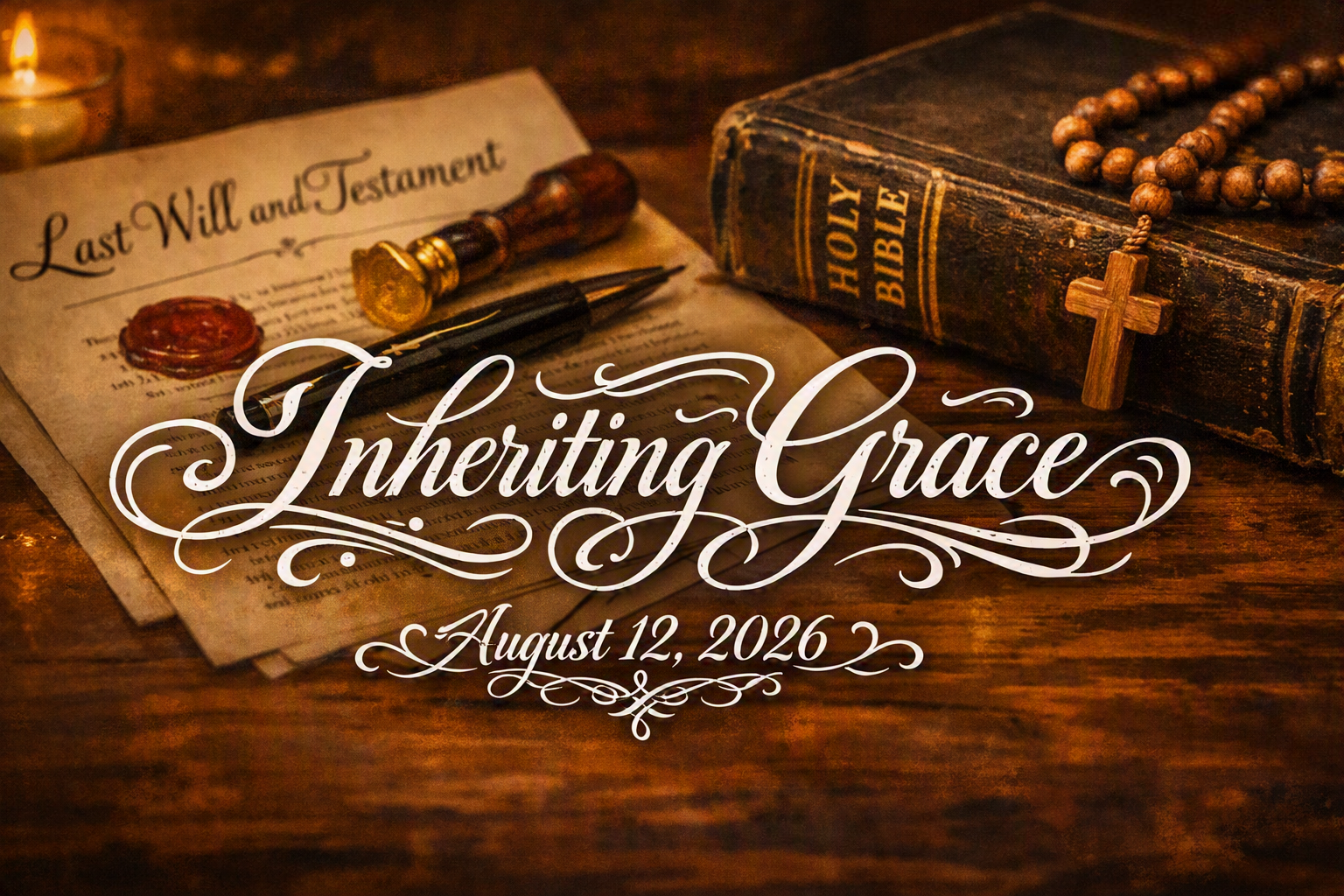
Let me draw this to a close with this thought: one day, we will all return to the dust from which we were shaped, and the breath He lent will go back to Him. Our children will gather up what becomes theirs somewhat by default—our money, our possessions, and the heirlooms that mark our family’s history. But on that day, our wisdom will not be inherited by Will or Trust. Wisdom is an inheritance that never falls to us automatically; it must be sought, or it must be given.
Paul would not stand by while parents squandered their calling, nor would he allow children to cast off the godly instruction they had received. Both duties remain: children are called to the lifelong labor of receiving wisdom, and parents are called to the faithful discipline and formation of their children. Neither can neglect their charge.
Some of you reading this are no longer rearing small children. Your sons and daughters are grown, some living far from you geographically, and perhaps further still in matters of faith. Yet I want to encourage you: your role is not gone. Your children are still learning from your character, your faithfulness, and the way you have walked with Christ. The conduct of your life continues to shape them even now and will remain one of the clearest memories they hold of you long after you are gone. So, continue to walk in Christ.
And as we talked about a moment ago, in those patterns we've all witnessed — the permissiveness that never instructs, the harshness that provokes rather than disciples — you may recognize your own household more than you'd like to admit. If you look back over decades of parenting and see, with painful clarity, seasons that leaned too far toward one failure or the other. What word does this text have for you?
Here it is: you are not called to control what is now beyond your hands, but you are still called to model repentance and grace. If you provoked anger where you ought to have shown patience, say so — even now, a phone call or a letter that says, "I was wrong to rear you in anger, and I ask your forgiveness" can do more gospel work than another decade of silence. If you were permissive where you ought to have instructed, you can still, even now, speak the truth of Christ to your grown children — not as a scolding parent, but as a fellow sinner who has found grace and wants them to find it too.
This is what it means for the family, even a fractured or grown-and-scattered family, to remain "in the Lord." Your righteousness before God was never based on your parenting record, and neither is theirs. Christ alone is the one who honors the Father perfectly on our behalf, who disciplines his church without ever provoking her to despair, who brings us up — all of us, prodigal children and imperfect parents alike — in the discipline and instruction that leads not to death, but to life.
So, whatever stage of life you find yourself in: do not neglect discipline, do not forsake godly instruction — and where you have failed, run again to the grace that meets failing parents and wandering children alike, in the Lord.
With love in Christ,
Pastor Chris
Reflection Questions
|
1. Name someone who has made a big impact on you spiritually. What about that person stand out the most? How can you model that character? |
|
2. Where do you see traces of permissiveness or harshness in your interactions with your children — and what would it look like to respond instead with Christ like steadiness? |
|
3. In what ways are you actively receiving wisdom from those God has placed in your life — and where have you resisted counsel that could help you flourish? |
|
4. What generational patterns (healthy or unhealthy) have shaped you, and how is God calling you to continue or correct those patterns in your own relationships? |
|
5. What spiritual inheritance are you intentionally passing on right now — through your words, habits, prayers, or example — and what might God be asking you to add or strengthen? |
Subscribe to my email list
Receive weekly devotions and theological reflections that deepen your walk with Christ.
Thank you for subscribing!
Have a great day!