The King is Reigning
Place yourself in the room that night. The hour is late. Lamps flicker against the walls of the high priest’s palace as the religious leaders gather to try Jesus. But something feels off from the very beginning. You realize justice has been turned upside down. In a proper court, charges are always brought, evidence is examined, and then a verdict is rendered. Here, the verdict has already been decided. Caiaphas the high priest has previously decided Jesus must be condemned to death (John 18:14). But they have no such charge that will justify the sentence of death.
READ DEVOTIONAL
To God Alone be the Glory
This is the last devotion in our series on the five solas, the great rallying cries of the Reformation. We have considered Scripture alone, grace alone, faith alone and Christ alone. Today we come to the one that holds the others together: “Soli Deo gloria”, "to God alone be the glory." If you are new to these phrases, nothing here requires a background in theology, only a willingness to think about why God does what he does.
READ DEVOTIONAL
Christ Alone
As soon as sin entered the world through Adam and Eve's rebellion, God met them in the garden. And even in that moment of sorrow and judgment, He proclaimed the first promise of the gospel by speaking to the serpent and foretelling the coming Savior who would one day crush the enemy's head: “I will put enmity between you and the woman, and between your offspring and her offspring; he shall bruise your head, and you shall bruise his heel” (Genesis 3:15, ESV).
READ DEVOTIONAL
Grace Alone
As we approach our celebration of Reformation Day, we are exploring the five "solas," Latin phrases that summarize what the Reformation recovered about the Christian faith. We have considered sola scriptura, Scripture alone as our final authority, and sola fide, faith alone as the means by which we are made right with God. Now we come to sola gratia: grace alone. Grace means undeserved favor. It is God giving what we could never earn.
READ DEVOTIONAL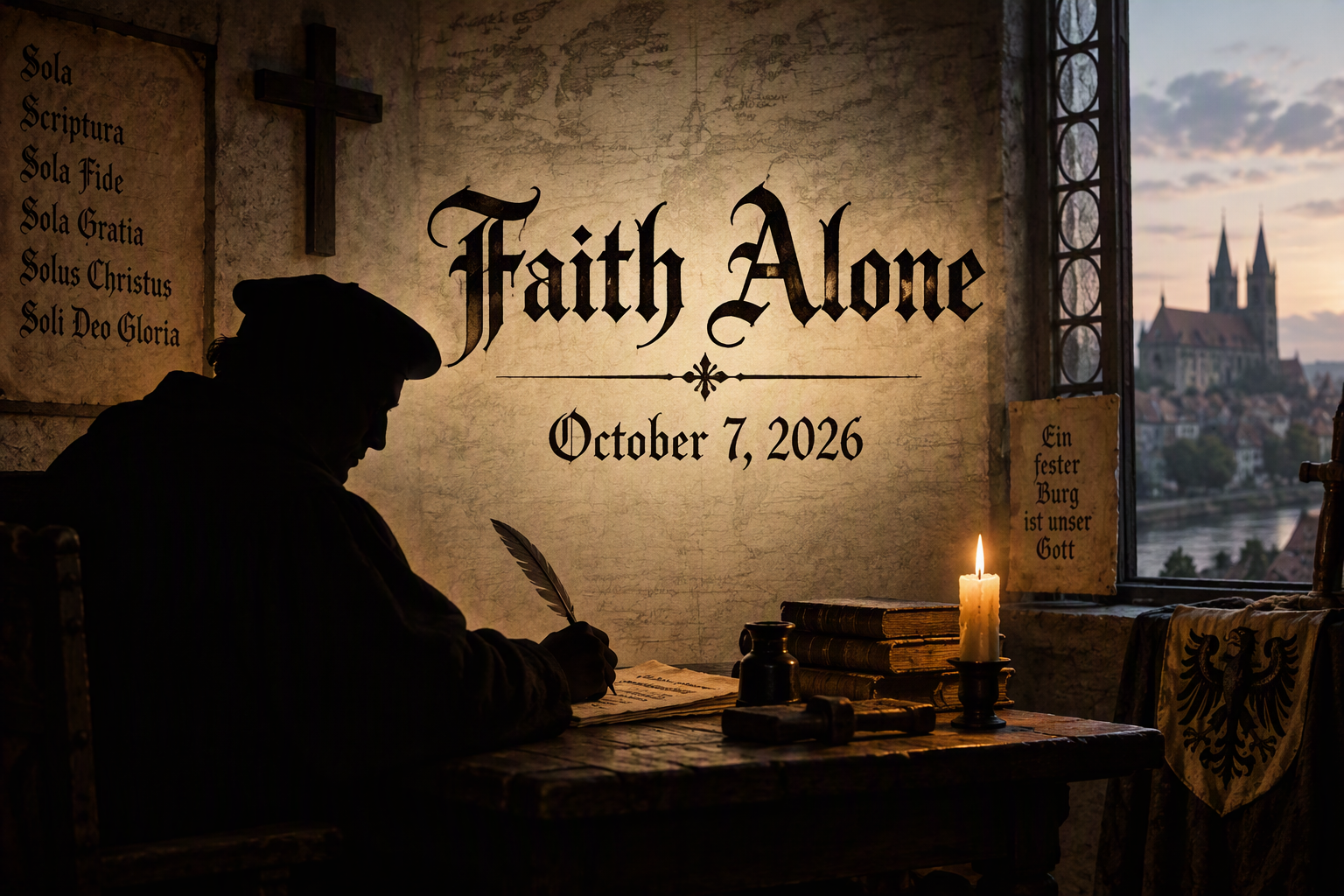
Faith Alone
Last week we began our journey toward Reformation Day by considering sola Scriptura: the conviction that Scripture alone is our final authority for what we believe and how we live. That conviction is not an end in itself. It is a means. Once we determine that the Bible alone governs the church, the next question naturally follows: what does the Bible actually say about how a sinner is made right with God?
READ DEVOTIONAL
Scripture Alone
The doctrine of Scripture alone begins with a problem. Notice the question: “Who can understand it?” The prophet's rhetorical question confronts us with a difficult reality: we cannot. That truth can be uncomfortable because the heart is the very instrument we use to evaluate nearly everything else. Yet Scripture tells us that the instrument itself is unreliable. I have never met anyone who naturally assumes, “I am probably mistaken in the way I feel about matters.” The human heart does not arrive with hesitation or self-doubt. It arrives confident, convinced, and almost always certain that it is right.
READ DEVOTIONAL