
The Bread of Life
In a small, easily overlooked offering of flour, oil, salt, and fire, God embedded a breathtaking preview of Christ Himself. This week we step into the temple courts, watching a priest lift an unleavened grain offering toward the altar — a shadow pointing to the sinless Son, anointed by the Spirit, tested through fire, broken for us, and given as our true daily bread. As the fragrance rises, Scripture’s unity comes alive: Leviticus and the Gospels speaking with one voice, revealing one Savior. Come see how this ancient ritual invites us to clear away the leaven, draw near to Christ, and feed on the Bread of Life who sustains us still.
CONTINUE READING
Creation Declares
I’m writing this week from our campsite in Crescent City, where the Pacific’s roar is impossible to ignore. Standing at the shoreline, watching waves thunder and wildlife rise and fall in the swells, I was reminded that creation is constantly declaring the power and presence of its Maker. Romans 1 says God’s nature is plainly seen in what He has made, and Job 38 shows us those depths belong entirely to Him. This devotion is an invitation to slow down, notice, and let creation lead you into awe-filled worship of the God who commands the sea and calls us His own.
CONTINUE READING
Like a Thief in the Night
On an ordinary night, when everything feels calm and predictable, we’re reminded that Christ’s return won’t wait for our readiness or our schedules. In Like a Thief in the Night, we examine how that truth unsettles us—not with fear, but with grace. It’s a call to wakefulness, to live alert and faithful even in the quiet hours. As we picture the stillness of a midnight house, we’re invited to ask: if He came tonight, would He find us awake, watching, and ready?
CONTINUE READING
Accused
When the accusing voice rises—after failure, comparison, or distraction—it can feel like a courtroom where your conscience never rests its case. "Accused" invites you to step into that courtroom with Paul’s words from Romans 8:1–2 and hear the verdict that silences every charge. This devotion calls weary hearts to stop building "resumes of righteousness" for acceptance and instead rest in the mercy that has already declared them free.
CONTINUE READING
Faithful Devotion
This week’s devotion, “Faithful Devotion,” draws us into the quiet, deliberate rhythm of spiritual leadership within the home. From Job’s early‑morning intercession to Joshua’s resolute declaration and David’s enduring legacy through Solomon, Scripture paints a picture of fathers—and all believers—who intentionally shape their households by the Word of God. In a world eager to disciple our families through its own curriculum, this devotion calls us to rise early, lead faithfully, and invest in a legacy that outlasts us.
CONTINUE READING
Christ Exalted
In a world divided by theology and politics, this devotion calls us back to the center of every promise—Jesus Himself. Drawing from Galatians 3, Colossians 1, and Ezekiel’s vision, we're reminded that all God’s covenants find their fulfillment not in nations or movements, but in the One who reigns with perfect righteousness. Whether we wrestle with prophecy or ponder promise, our unity and hope are found in Him alone—the rightful Heir, the Redeemer, and the everlasting King.
CONTINUE READING
Knowing God vs. Knowing About God
We live in a world overflowing with information about God—sermons, podcasts, books, and theological resources at our fingertips. But information is not intimacy. You can memorize every verse, master every doctrine, and still miss the Person those truths reveal.
CONTINUE READING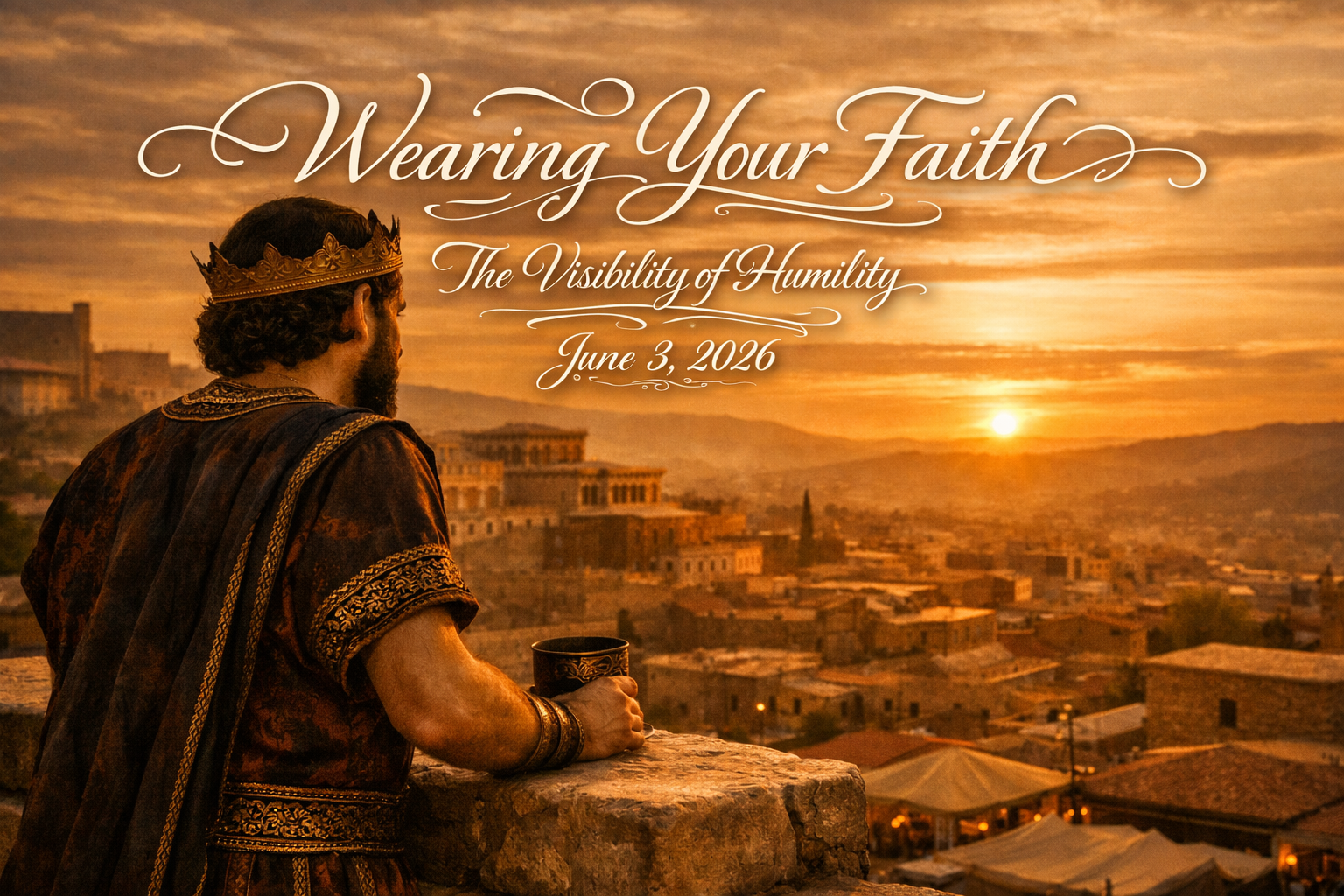
Wearing Your Faith: The Visibility of Humility
There’s a kind of Christlikeness you can’t fake — the kind you notice before a single word is spoken. It’s the quiet way a person listens, the gentleness in how they treat others, the sense that they’re not trying to win the room but to serve the people in it. Scripture calls that humility, and Philippians 2:3 tells us it’s one of the most visible marks of the Spirit’s work in a believer. But if humility is a sign of grace, pride is the shadow that threatens it — as David’s story painfully shows. This devotion explores how pride quietly grows, how it breaks what it touches, and how God, in mercy, restores the heart that finally bows low before Him.
CONTINUE READING
Apostolic Hermeneutics
Apostolic hermeneutics is the Spirit‑guided approach by which the apostles interpreted the Old Testament as a unified, Christ‑centered revelation, seeing its promises fulfilled in Jesus and His church rather than awaiting separate national or political fulfillment.
CONTINUE READING
Rare Divine Satisfaction
How many times does the Old Testament say that God was satisfied? You may not realize how rare it is for the bible to say that God is satisfied. Pleasure and satisfaction, while they often work in concert with one another, are not interchangeable.
CONTINUE READING
Find Your Harbor
"God is our refuge and strength, a very present help in trouble. Therefore we will not fear though the earth gives way, though the mountains be moved into the heart of the sea, though its waters roar and foam, though the mountains tremble at its swelling... Be still, and know that I am God. I will be exalted among the nations, I will be exalted in the earth!"
CONTINUE READING
Vanity or Victory?
There are seasons in life when the ground beneath us feels utterly solid — when health is good, relationships are whole, and the future seems bright. In these seasons, Solomon’s reflections can feel deeply heavy, and many prefer not to meditate on them. Still, we are wise to learn from Solomon even in times of joy, for it is always right to lift our eyes beyond this fading world toward the heavens because no one is immune to seasons of darkness.
CONTINUE READING
What does it mean that we are made in God's image?
The Latin phrase is imago Dei, and it stands as one of the most profound declarations in all of Scripture. But let us be careful — this does not mean that we are little gods. That is a heresy, and a dangerous one at that. What it means is that God, in His perfect wisdom, has blessed us to share in certain of His characteristics by granting us physical bodies through which to experience them.
CONTINUE READING
Israel's Land Promise
You have seen the headlines over recent months. Many of you may have sincere, searching questions about Israel — about what is happening in the Middle East, and about what, if anything, the Bible has to say about it. That is a good instinct. The desire to run to Scripture when the world feels unstable is precisely the right move. But we must be careful. Current events make a poor lens through which to read Scripture. Scripture, however, makes an excellent lens through which to read current events.
CONTINUE READING